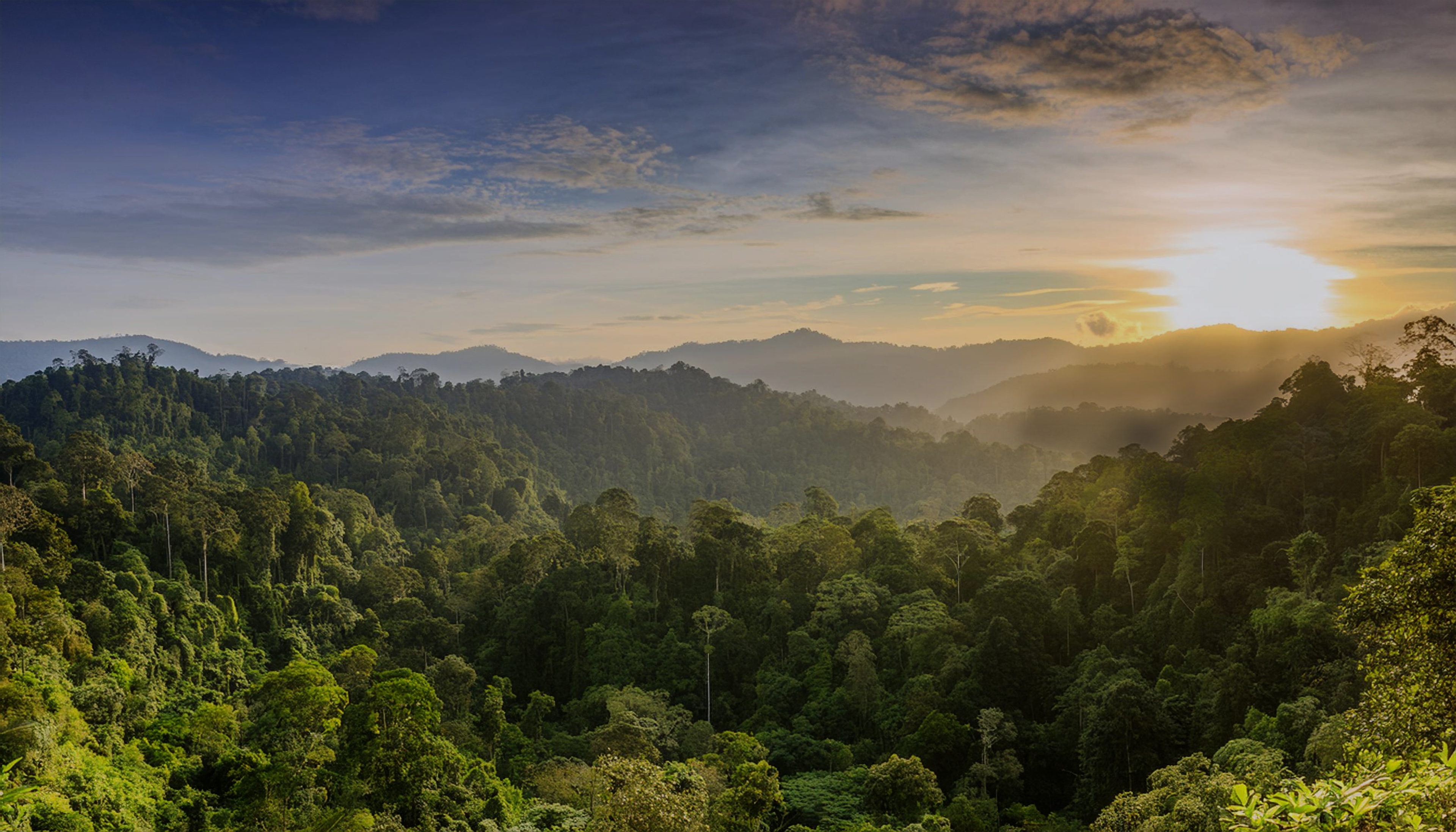
Borneo Rainforest, Indonesia
Protecting 88,000 hectares of tropical rainforest in East Kalimantan, Indonesia — a region that has lost ~30% of its forest to oil palm conversion.
Annual Carbon Removal
200,000 tonnes
Capacity to scale to 480,000 tonnes annually
Size
88,000 ha
Increasing to 212,000 hectares
Marquee Species
- Miller's Grizzled Langur
- Bornean Orang-utan
- Sunda Clouded Leopard
Credit Type
Activity
Standard
Monitoring, Reporting & Verification
- Flux towers
- AI soundscape analysis
- Camera traps
About This Project
Borneo, the world’s third-largest island, is home to some of the most carbon-dense and species-rich forests on the planet, holding six per cent of global biodiversity. East Kalimantan, in the Indonesian part of Borneo, has lost roughly 30% of its forest in the past 20 years, primarily due to conversion to oil palm plantations.
Wehea-Kelay is a landscape of lowland and sub-montane rainforest, positioned on the frontier between intact forest and expanding oil palm production. The project area consists of 88,000 hectares, with the potential to scale to 212,000 hectares. The project follows the SOCIAL CARBON methodology for the Conservation of Key Biodiversity Areas, with removals measured directly using flux towers and credits issued on net annual carbon removal.
The project area is of exceptional conservation importance, providing critical habitat for endangered species, including the only known population of the Miller’s Grizzled Langur, one of the world’s most endangered primates, as well as the Bornean Orangutan, with an estimated 750+ individuals in the region.
Community objectives focus on supporting local communities across the project landscape, including those in and around adjacent forest areas and concessions. The project creates local employment as rangers and biodiversity monitors, and supports environmental education programmes that strengthen long-term stewardship.
Marquee Species
Interested in Borneo Rainforest, Indonesia?
Contact us